Whitehorse Power Centres Project
Yukon Energy is planning two new thermal power centres, related power lines and one new substation in the Whitehorse area.
The project is designed to make sure Yukoners have dependable power when winter demand is highest. It will also strengthen the electricity grid so more intermittent renewable power can be added safely over time.
Why this project is needed
The Yukon’s electricity grid is isolated from the rest of North America. Today, when local electricity supply is tight, we cannot rely on a neighbouring province or territory for backup power.
At the same time, demand for electricity is growing. The Yukon’s population is increasing, and more Yukoners are using electricity to heat their homes and power their vehicles.
Winter is when our electricity system is under the most pressure. On the coldest days, we need enough dependable power to keep homes warm and lights on. We also need backup power during emergencies, drought years and times when wind or solar power is not available.
Renewable electricity remains an important part of Yukon Energy’s long-term plan. But intermittent renewable resources like wind and solar do not produce electricity all the time. Adding more of these resources safely requires a strong, stable grid and dependable sources of power that can respond quickly when renewable generation changes.
For the next several years, thermal generation – diesel or liquefied natural gas (LNG) – is part of that reliability plan.
What the Whitehorse Power Centres will do
1. Provide dependable winter power
The new power centres will add power that Yukoners can count on when it is needed most – during the coldest winter days, drought years, emergencies and times when renewable resources are not enough.
2. Strengthen the grid for the future
The project also includes new substation and transmission infrastructure.
These upgrades will help move more electricity where it is needed and will provide the infrastructure needed to help modernize the system so it can support more automated technology in the future.
Together, the power centres and grid updates are intended to reduce the risk of power outages in the Whitehorse area and help restore power more quickly when outages happen.
Project plan
Yukon Energy plans to build two new thermal power centres and one new substation in the Whitehorse area to meet forecast electricity needs through 2040. We are assessing both diesel and LNG as fuel options.
The project also includes upgrades needed to connect the new power centres to the Yukon grid.
| Completion phase | Description | Expected in-service date |
|---|---|---|
| First Power Centre Build |
|
2028 |
| Second Power Centre Build |
|
Winter 2030 |
| Expand Power Centres |
|
Winter 2035 |
Project timing and capacity
The project entered the Yukon Environmental and Socio-economic Assessment Board (YESAB) Executive Committee screening process in 2025.
Yukon Energy will assess up to 60 megawatts of generation at the south site and up to 90 megawatts at the north site, for a total of up to 150 megawatts.
This is the amount of generation being assessed. It does not mean all 150 megawatts will be built at once. Building the project in phases gives Yukon Energy flexibility to respond as electricity demand, renewable energy projects and new technologies change over time.
Proposed sites
Yukon Energy has completed a detailed review of possible locations and narrowed the generation sites to a proposed north site and a proposed south site.
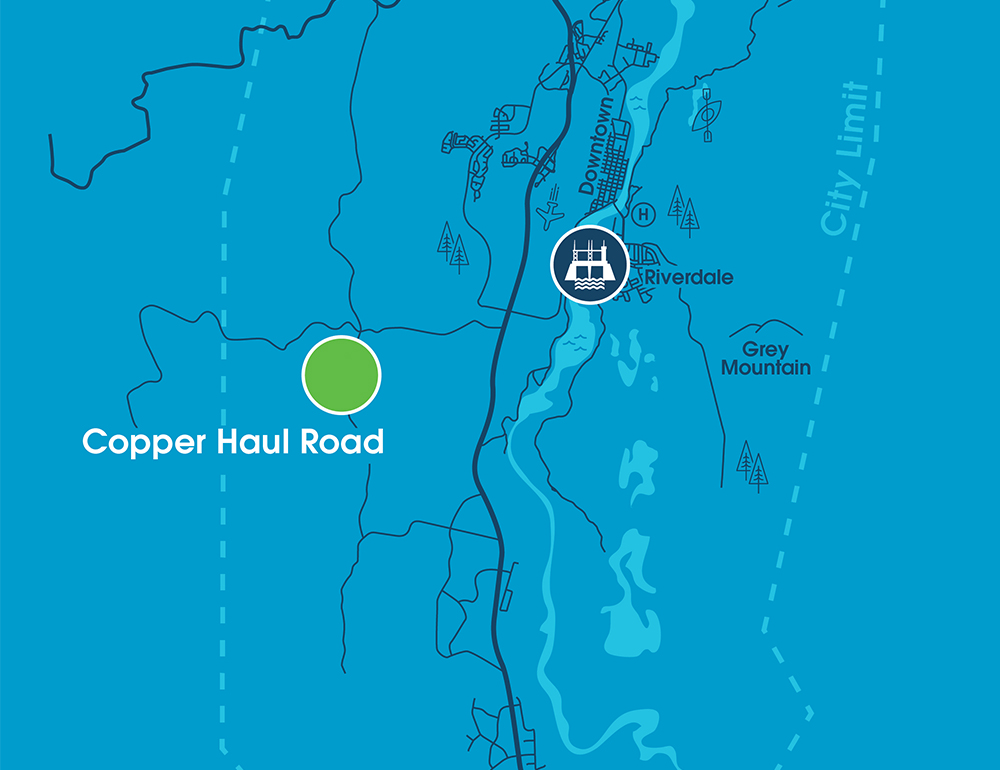
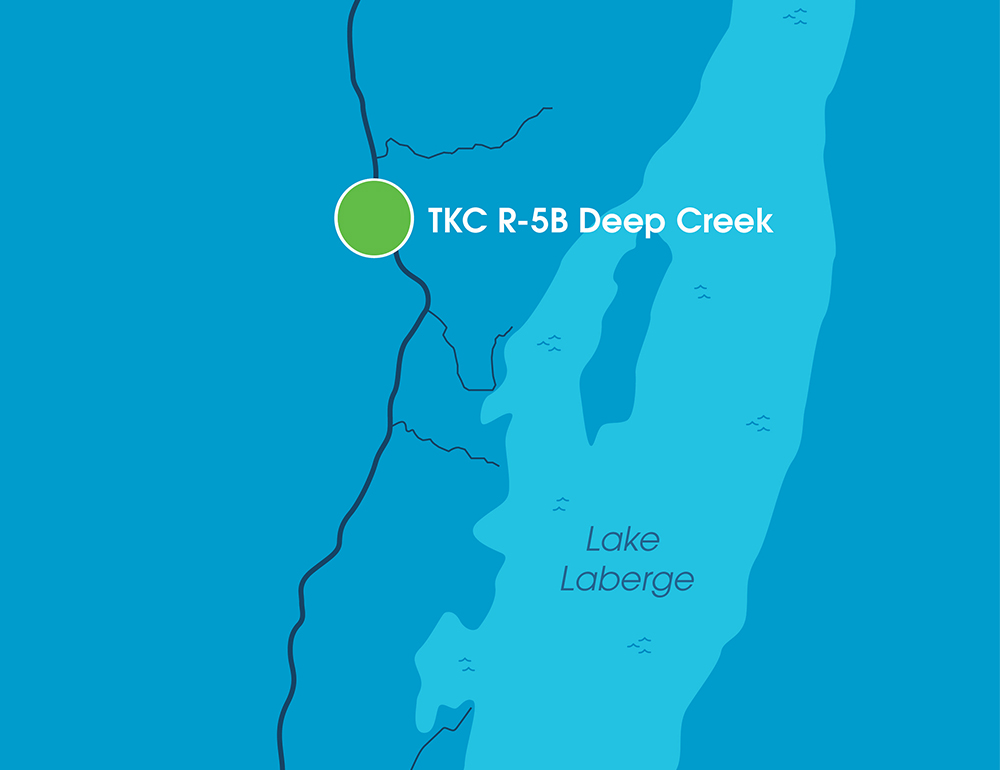
The map here shows the proposed north and south power centre sites and the proposed substation site.
South Site
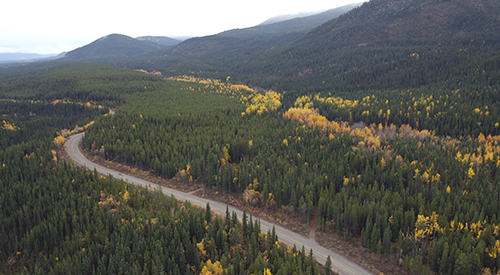
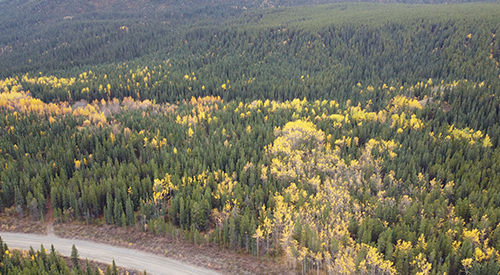
Copper Haul Road
| Owner | Government of Yukon |
|---|---|
| Current Use | Undeveloped (Greenfield site) |
| Location Notes |
|
| Distance to nearest residence | ~2,400 m |
North Site
Deep Creek
| Owner | Ta’an Kwäch’än Council |
|---|---|
| Current Use | Abandoned gravel pit |
| Location Notes |
|
| Distance to nearest residence | ~2,000 m |
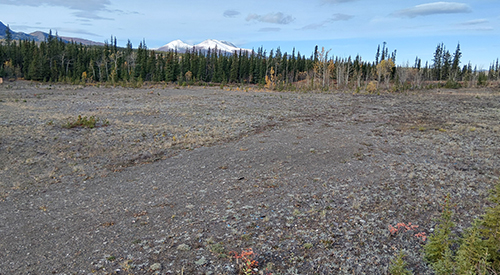
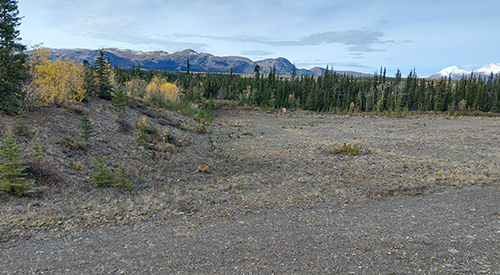
Substation Site
Long Lake Road
| Owner | Government of Yukon |
|---|---|
| Current Use | Beside abandoned sewage lagoon |
| Location Notes |
|
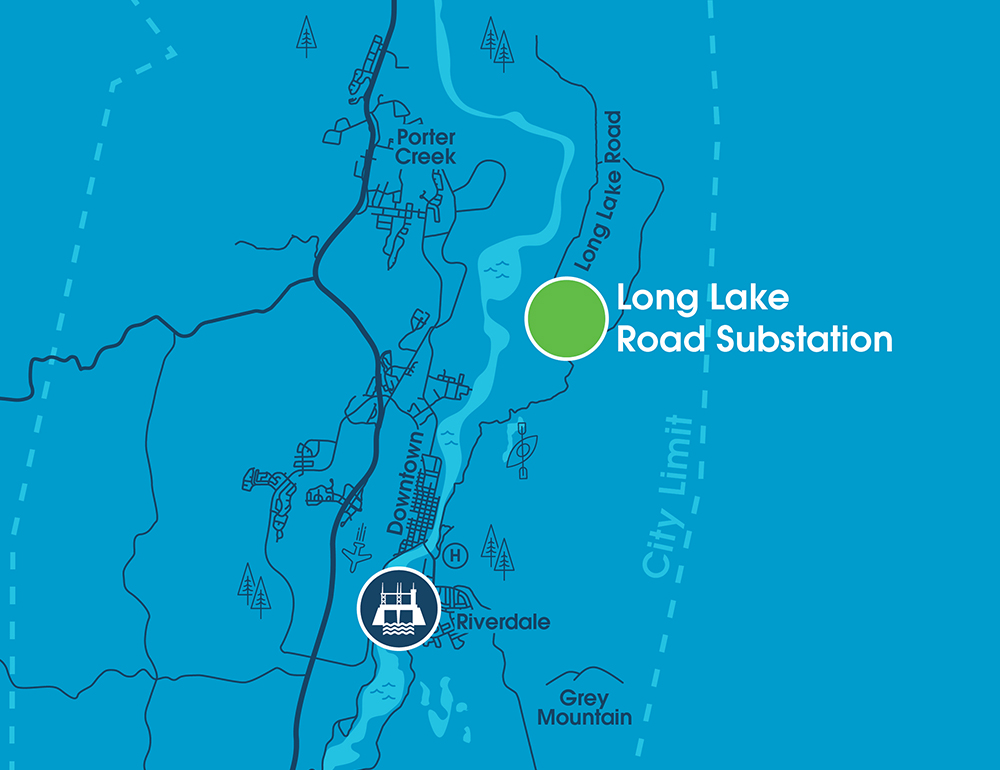
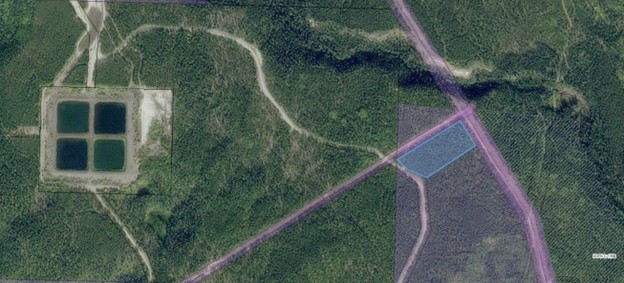
The video below also illustrates the proposed site locations:
How the sites were evaluated
Site selection began in early 2024. Yukon Energy identified 22 possible locations through discussions with the Kwanlin Dün First Nation, Ta’an Kwäch’än Council, City of Whitehorse and Government of Yukon.
That list was narrowed to 12 potential generation sites, which were included in Yukon Energy’s Project Description to YESAB. The list was then reduced to five sites for further review before the final three proposed sites were identified. Since the south site is within City of Whitehorse limits, this site is going through the City of Whitehorse’s Master Planning Process as well.
No site is without challenges. Each location was assessed using technical, environmental, community and practical considerations, including:
- how close the site is to areas that use the most electricity and to existing power lines
- access during an emergency
- feedback from First Nations governments
- feedback from the public
- land ownership and what would be required to acquire or use the land
- ground conditions and how practical the site would be to build on
- possible effects on the environment and community, including air quality, noise, wildlife and recreation
- whether the site fits local zoning and could provide other community benefits, such as improved roads or firebreaks
- safe operation around airport activities
- whether the site is large enough for the project and possible future growth
- access from major roads
- the length and complexity of new power lines, including possible water crossings and required upgrades
- opportunities to share costs with other groups or projects
Transmission line routing
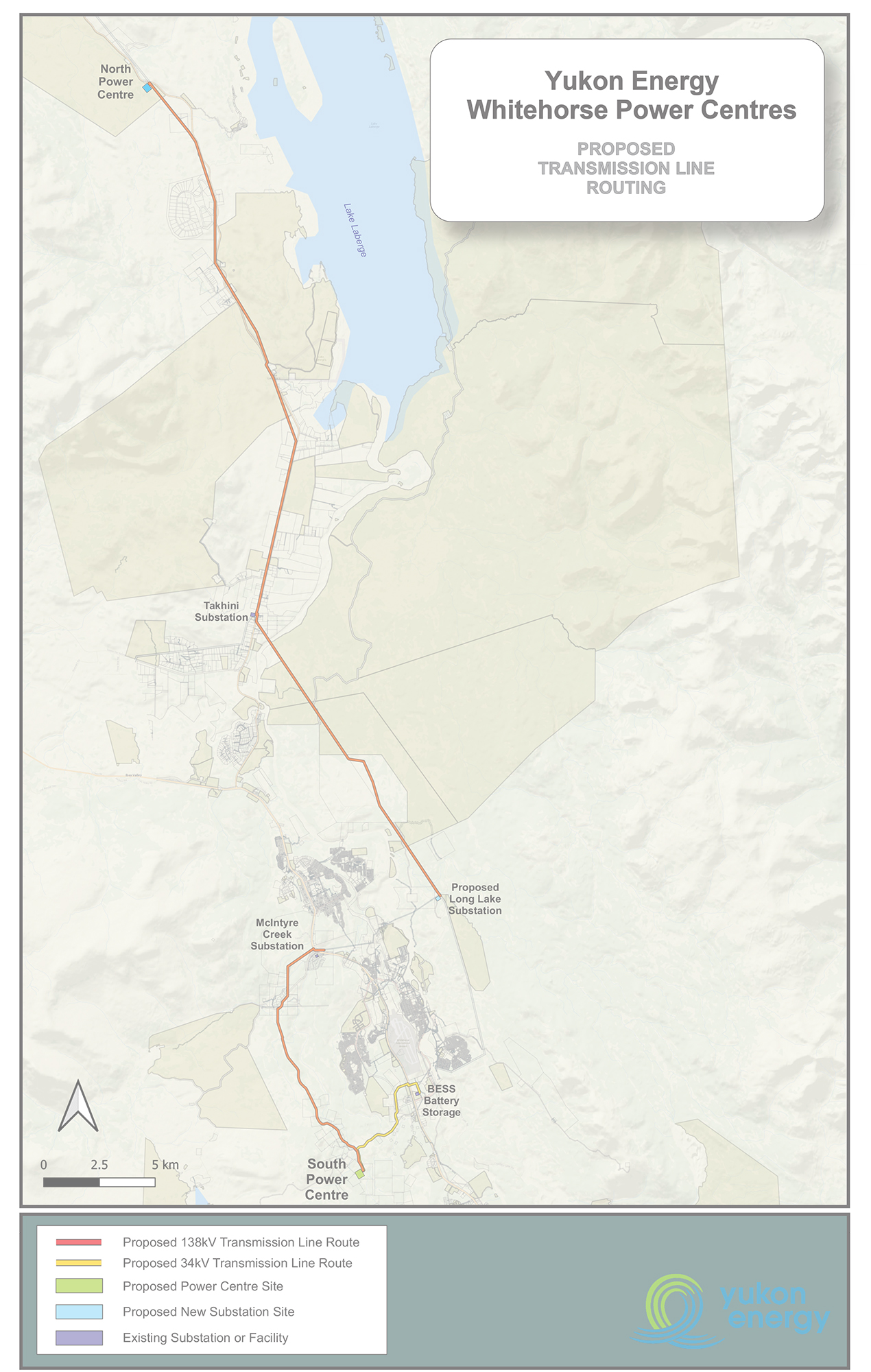
The project includes new transmission lines and connections to link the power centres to the Yukon grid. The transmission lines will be built in phases, based on the amount of generation at each site.
The two proposed transmission lines from the south site would require new power line right-of-ways within existing road right-of-ways, while the proposed line from the north power centre would follow existing power line right-of-ways.
View the map below to see the proposed transmission line routes. The routes are still being refined and may change as the project moves forward. Questions or feedback on the proposed routes can be directed to communications@yec.yk.ca.
We are also engaging directly with people and organizations located close to the proposed route.
Engagement
Phase 1: before sites were shortlisted
After Yukon Energy submitted its Project Description to YESAB with 13 potential project sites – 12 generation sites and one substation site – we began the first phase of public and stakeholder engagement.
The goal was to explain why the project is needed and how it fits into Yukon Energy’s Road Map to 2050. We also wanted to hear questions, concerns and feedback about the project and potential locations.
Phase 2: shortlisted sites
The second phase of engagement began in early 2026, after the generation options had been narrowed to two sites in the south and two in the north, along with one proposed substation site.
During this phase, we shared more detailed information about the shortlisted sites and asked people about their concerns and comments.
Feedback from both phases of engagement is available in the What We Heard report in the related downloads section below.
Phase 3: final proposed sites and transmission line routing
We are currently in the third phase of engagement that will continue until our Project Proposal is submitted to YESAB.
If you have questions or would like to share feedback about the final proposed sites or transmission line routes, please contact us directly at communications@yec.yk.ca.
Noise and air quality
We heard concerns about how the project could affect noise levels and air quality near the proposed sites.
The thermal generators being considered for this project will be newer, quieter and more efficient than Yukon Energy’s older diesel generators at the Whitehorse Hydro Facility.
We are also conducting air quality and noise modelling using worst-case operating assumptions. Air quality results will be compared with the Yukon Ambient Air Quality Standards, while noise results will be compared with the British Columbia Energy Regulator Noise Control Best Practices Guideline. We are also completing a Human Health Risk Assessment to better understand any potential effects on people.
Learn more about the engagement
Phase 1: project purpose and need
Watch the recording from our phase 1 open house to learn about the project’s background and why it is needed.
Phase 2: shortlisted sites
Watch the recording from our phase 2 online open house to learn more about the shortlisted sites and the sound modelling completed for the project.
See the related downloads below for engagement materials and the What We Heard report.