Aishihik Relicensing Project
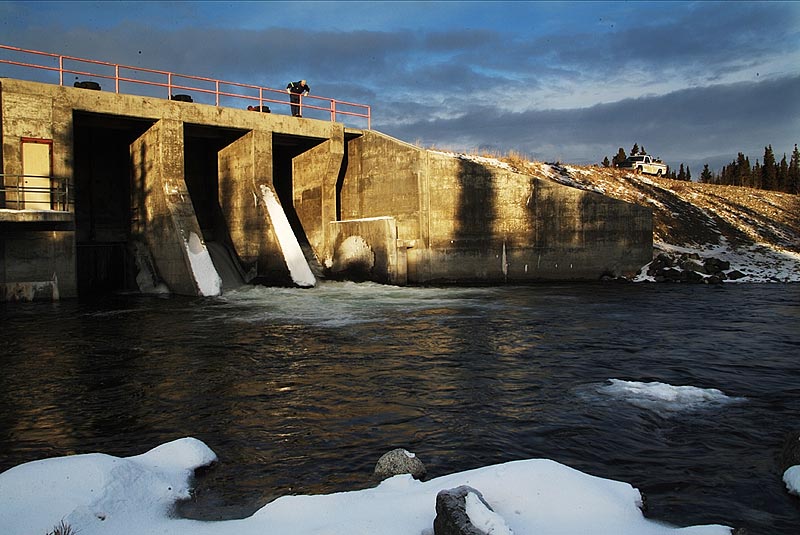
Since 1987, Yukon Energy has owned and operated the Aishihik hydro facility. The hydro facility is a key power plant in Yukon’s electricity system. It provides 25 per cent of the renewable electricity available on the Yukon grid, including about 40 per cent of the electricity Yukoners need each winter.
Yukon Energy was issued its 5-year water use licence for the Aishihik hydro facility on December 21, 2022. The licence expires on December 31, 2027. Yukon Energy is now seeking a long-term licence so it can continue to operate the facility. Yukon Energy is seeking a long-term licence to provide energy security and support fulsome and ongoing monitoring. A long-term licence will also spread project costs over a longer period of time to help minimize the impact of project costs on electricity rates. The new water use licence will outline the regulations that we must follow, including the amount of water we can store and use in Aishihik and Canyon Lakes, operating guidelines, as well as how we monitor and mitigate impacts of operating the facility, and adapt to changing climate and environmental conditions over time.
To get a new water use licence, Yukon Energy must submit a Project Proposal to the Yukon Environmental and Socio-economic Assessment Board (YESAB).
Working together
Yukon Energy, Champagne and Aishihik First Nations, the Government of Yukon, and other organizations and individuals have been working together to better understand the effects of the Aishihik hydro facility and how the facility may be used in the future. In July 2022, Champagne and Aishihik First Nations, the Government of Yukon, and Yukon Energy (the Parties) signed a number of Agreements to guide their relationship regarding the long-term operation of the Aishihik Generating Station and bring effect to reconciliation through the implementation of shared priorities.
One outcome of the Agreements was an expanded Monitoring and Adaptive Management Plan, along with a program to implement it. Developed collaboratively by all Parties, the plan gathers information to identify and evaluate the effects of the Aishihik Generating Station and how to respond to these effects. It also measures whether corrective measures and responses are working and gathers information to support analysis and decision-making about water levels and how we manage water flows. Key values for the plan are grounded in three focal areas, starting at the north end of Äshèyi Män (Aishihik Lake), moving to the north end of Ädäts’ür Män (Canyon Lake), and ending at the narrow canyon area before the The Yänlin (Aishihik River) meets the Titl’àt Män Tágà (Dezadeash River).
Key monitoring areas include:
- Fish, wildlife and their habitat
- Observable changes in the Aishihik River
- Public health, safety and access
- Drinking water quality
- Property improvements
- CAFN Settlement Lands
- Heritage resources
Addressing interests and concerns
Over the years, Yukon Energy has heard from Citizens and local land users about some specific concerns about the operation of the Aishihik Generating Station. As part of the Aishihik Generating Station 5-year licence renewal process, Yukon Energy talked with more than 120 of the area’s users.
FISH AND WILDLIFE
- We recognize that hunting, trapping and fishing are important to Champagne and Aishihik First Nations Citizens, local residents and many Yukoners, as is outdoor recreation and wilderness tourism.
- We’ve studied the health of fish in the Aishihik and Canyon lakes and continue to do so through the Monitoring and Adaptive Management Plan. The studies show that the fish and fish populations are healthy, based on historical numbers.
- We have made it easier for fish to move through the fishway at the Aishihik Lake Control Structure. We are also working on additional improvements to increase opportunities for upstream fish passage from Canyon Lake to Aishihik Lake, while downstream fish migration appears unaffected.
WATER FLOWS
- Yukon Energy acknowledges that there are icing and wintertime flooding issues downstream of the Aishihik Generating Station.
- To better understand these issues, we are running a river geomorphology program that looks at the effects of our flow protocols on winter ice processes, and other erosion pathways.
- We are also doing a flow ramping study to investigate how flows effects fish habitat downstream.
- We continue to monitor overflow icing onto Settlement Land and private property.
IMPACTS ON SETTLEMENT LAND AND TRADITIONAL LAND USES
- We recognize that Aishihik Lake and the surrounding areas are culturally important to Champagne and Aishihik First Nations Citizens.
- Our proposal will outline rules for us to monitor how icing impacts Settlement Land.
- Our Heritage Resources Management Plan was updated in December of 2024 and field assessments will take place in 2026.
- During the last relicensing process, the Yukon Waters Act provided a process for financial compensation for people who believed they were negatively impacted by the ongoing operation of the Aishihik Generating Station. A similar process will be provided during this relicensing process as well.
Share your feedback
To help inform our Project Proposal to YESAB, Yukon Energy is seeking feedback. We held open houses in January 2026. Information and feedback received during those open houses is available in the 'related downloads' section below. There are a few different ways you can share your feedback now: